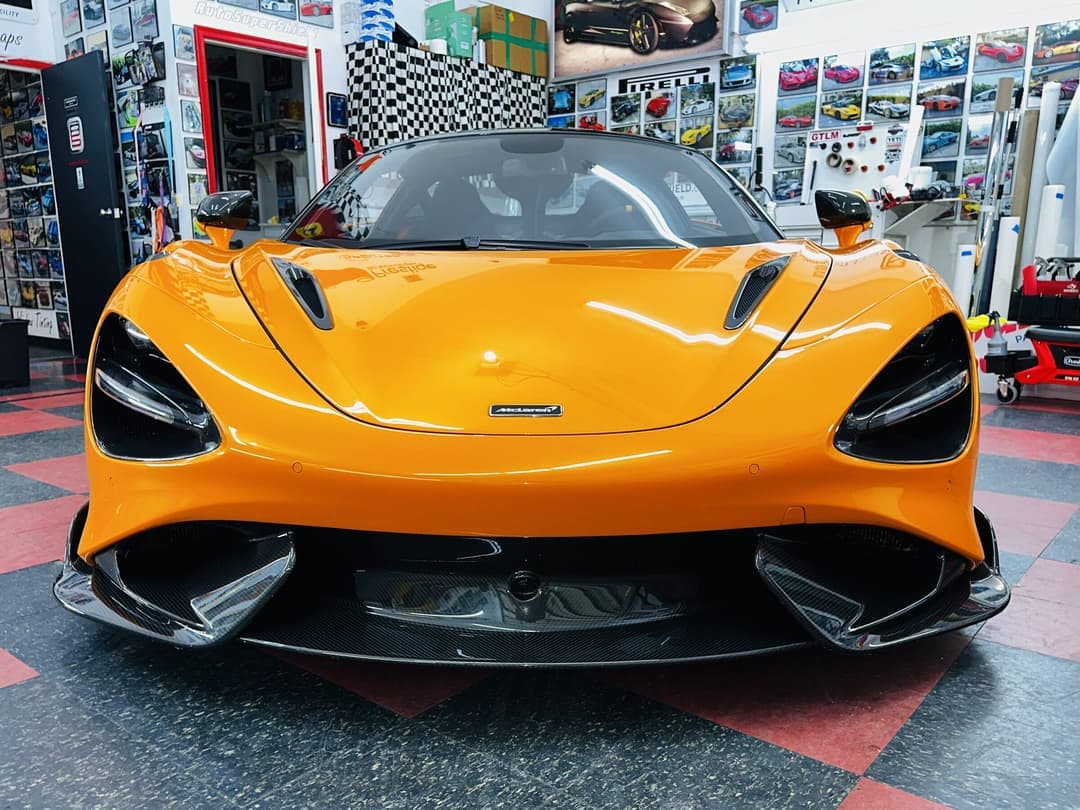
A carbon hood is one of the oldest moves in the modifier's playbook — and one of the most misunderstood purchases in it. Here's the honest ledger, including the Florida-specific problem that brings carbon hoods into our shop every month.
The pros
- Weight: a quality carbon hood can cut 15–30+ lbs off the nose — real, feelable front-end weight on a momentum car
- Looks: exposed weave is a statement nothing else makes
- Heat management: many designs add functional venting factory hoods don't offer
The cons
- Cost: quality pieces run four figures; bargain hoods wave, warp, and fit like guesses
- Fitment: even good aftermarket carbon can need adjustment — budget for it
- Insurance & practicality: declare modifications; some carriers care
- The big one in Florida: UV. Cheap clear coats over carbon yellow, haze, and eventually crack under relentless sun — and a refinished carbon hood never quite looks the same
The Florida survival plan for carbon
The UV con is solvable, and it's why carbon owners find us: paint protection film over exposed weave blocks the UV assault and stops the rock chips that love a leading edge, while keeping the weave fully visible. Gloss film deepens the wet look; XPEL Stealth over carbon produces a satin weave finish that's become its own trend.
If you're buying the hood anyway, film it the same week it's painted or cleared. Protecting a $2,000 hood with film costs a fraction of refinishing it in year three.