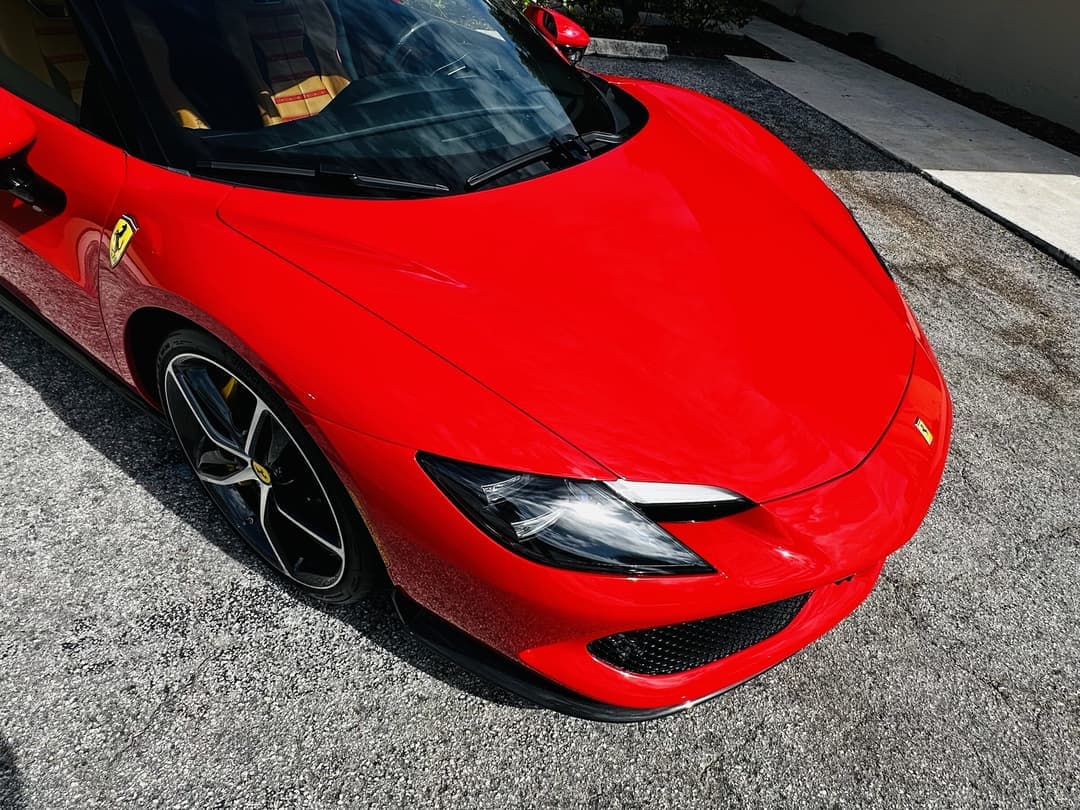
The internet is full of $30 bottles promising 'paint protection.' Real paint protection film costs a hundred times that. The difference isn't marketing — it's physics, and it comes down to one question: what are you trying to stop?
What sprays and coatings actually do
Spray sealants and ceramic coatings are chemistry: an ultra-thin sacrificial layer measured in microns. They excel at repelling water, resisting UV and chemical etching (bird droppings, bug acid, sap), keeping the car cleaner, and adding gloss. A professional ceramic coating like XPEL Fusion Plus does all of this for years at a time and is genuinely worth having.
What no spray or coating can do is absorb impact. A rock at 70 mph doesn't care about hydrophobicity.
What film does that nothing else can
PPF is a physical urethane barrier around eight mils thick — dozens of times thicker than any coating. It absorbs rock chips, resists scratches and road rash, self-heals light swirls with heat, and carries up to a 10-year warranty. It's the only product in this conversation that stops mechanical damage.
- Rock chips: film stops them; sprays don't — full stop
- Swirl marks: film self-heals; coatings resist lightly, sprays not at all
- Chemical etching: both film and coatings protect well
- Water behavior & easy washing: coatings win per dollar
The right answer is usually both
Film where the road attacks — front bumper, hood, fenders, mirrors — and ceramic everywhere for gloss, UV, and easy maintenance. That's our Shield Combo, and it exists because each product covers exactly what the other can't. On a car you plan to keep, sprays are maintenance; film is protection.