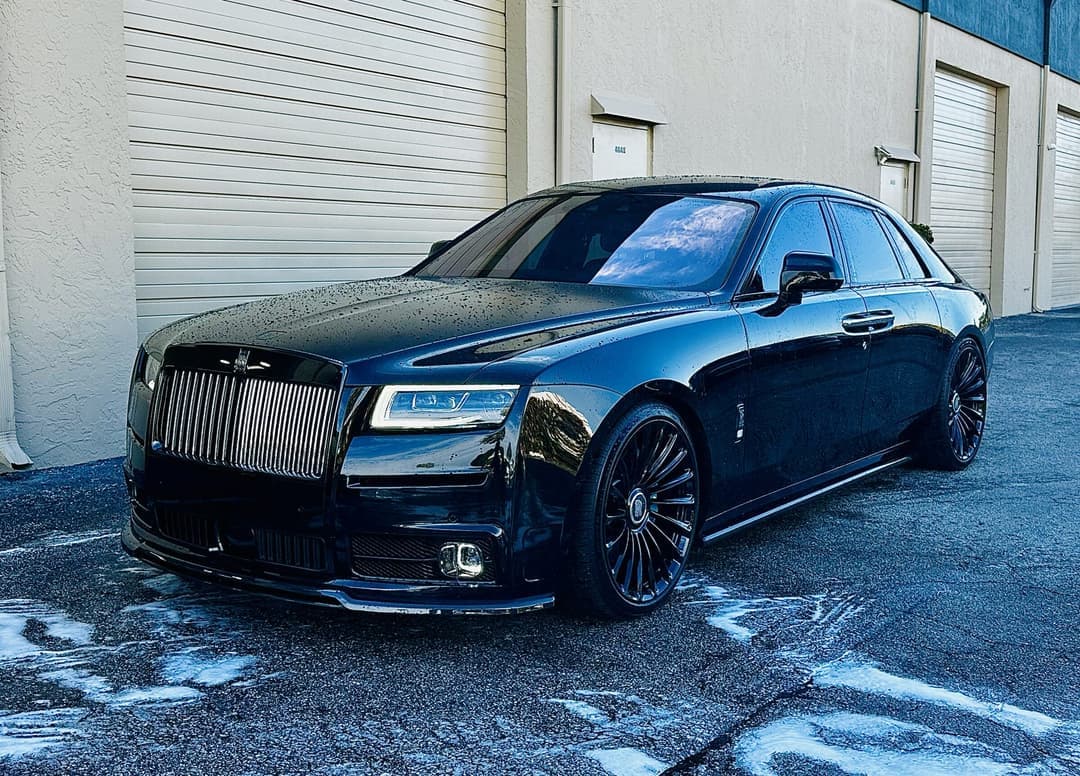
Black car, tinted glass — it's the cleanest look in the game, which is why it's one of the most common requests in our Boca Raton bays. Two decisions matter: how dark, and what the film is made of. Most people obsess over the first and ignore the second. That's backwards.
How dark: the shades that work on black
On black paint, mid-range shades read darker than they measure because the glass sits against a dark body. A 35% film on a black car gives most of the blackout effect while keeping night visibility comfortable. True limo looks (5–20%) photograph beautifully but come with real nighttime compromises — and legal limits.
Florida allows 28% VLT on front side windows and 15% behind the driver for cars (6% for SUVs and trucks). The classic black-car setup we install: legal-limit fronts, darker rears, one consistent look from the curb.
Why material matters double on a black car
Black paint absorbs heat; black interiors hold it. A black car in a Florida parking lot is the worst-case cabin, which makes heat-rejecting film a comfort upgrade you feel every single afternoon. Dyed film darkens the glass but barely touches the heat. Nano-ceramic film rejects infrared heat at any shade — you can run a lighter, fully legal tint and still drop the cabin temperature dramatically.
XPEL Prime XR Plus is what we install: ceramic particle technology, SPF 1,000 UV protection, no signal interference, and a lifetime warranty against fading and bubbling.
The black-on-black checklist
- Front sides at Florida's 28% limit — dark enough to match, legal at every stop
- 15% (cars) or darker (SUVs) behind the driver for the blackout look
- Nano-ceramic film, not dyed — heat is the real enemy on black paint
- Consider a clear or near-clear windshield film: biggest glass, biggest heat gain