Hurricane Season Car Protection in Boca Raton: A 2026 Checklist for Florida Drivers
Atlantic hurricane season runs June 1 through November 30. Most "hurricane prep" advice treats your car as an afterthought, somewhere below clearing the gutters and charging the weather radio. That is backward for a lot of Boca Raton households, where the car in the driveway is the second-most-expensive thing you own and the one most exposed to wind-borne debris, salt aerosol, and flooding. This is a Boca shop's full checklist: what to do before the season, what to do when a named storm enters the cone, what to do during, and what to do in the first 72 hours after.
We have spent the last decade in Palm Beach County unscrambling salt etch, debris chips, and flood loss after storms like Idalia, Ian, and Nicole. None of that is a prediction about 2026. It is the pattern of what a coastal South Florida car actually goes through, and the protection that holds up against it.
The 2026 Atlantic hurricane outlook and why it matters for your paint
NOAA issues its seasonal outlook in late May each year. Whatever the named-storm count, the planning logic for a Boca driver does not change: it only takes one storm tracking up the coast to coat every car in the county with salt and pelt the exposed ones with debris. Track the season through the National Hurricane Center and your county alerts, and treat the outlook as a reason to prep now rather than a forecast for your specific street.
Here is the part the generic prep lists miss: a hurricane does not have to make landfall in Boca to damage your paint. A storm 80 miles offshore drives coastal wind that carries salt aerosol inland for days. That salt lands on warm paint, and combined with sun and humidity it accelerates oxidation and can etch an unprotected clear coat. The paint damage from a season is often cumulative and invisible until it is not.
Why South Florida cars take more damage than the storm headlines suggest
Wind-borne debris and rock chips
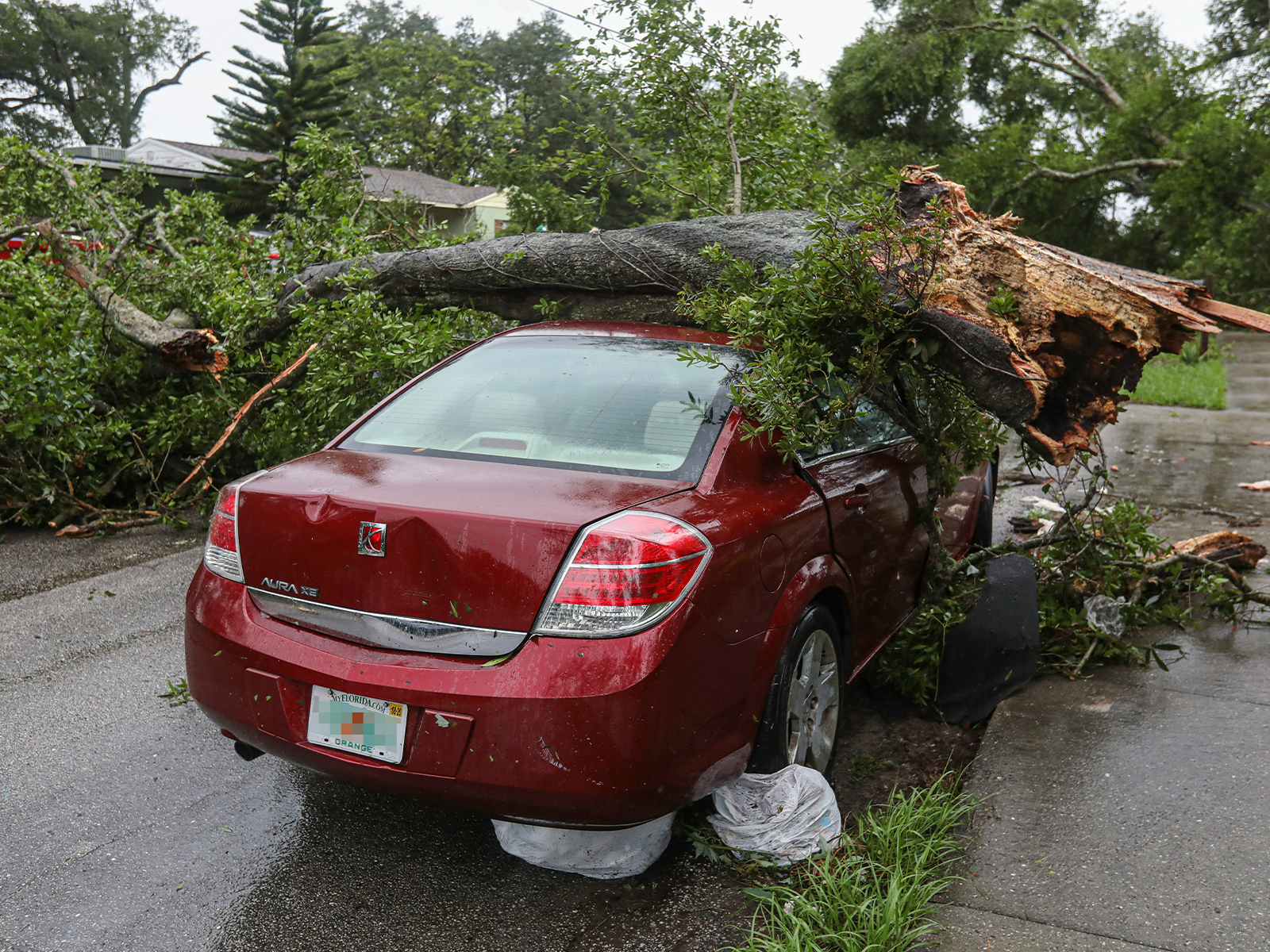
Tropical-storm-force winds turn loose gravel, roof granules, palm fronds, and small branches into projectiles. Even a glancing strike chips clear coat, and a chip in Boca's humidity is an open door for corrosion to start. The front clip, hood, and windshield take the worst of it.
Salt aerosol on coastal cars before the storm even lands
Onshore wind ahead of a storm carries a fine salt mist miles inland from A1A and the Intracoastal. It settles on horizontal panels, the hood, the roof, the trunk, and works into door seams and rocker panels. Salt plus moisture plus heat is the corrosion recipe, and it is doing its work before the first rain band arrives.
Brackish flooding and what it does to brake lines and electronics
Street flooding in coastal Boca is rarely clean rainwater. It is brackish, carrying salt and grit. Water that reaches the brake lines, the floor pans, or the low-mounted electronics modules on a modern car does damage that is not visible from outside. Even a few inches over the door sill can wick into carpet and wiring.
Tree sap, pollen, and post-storm acid rain
Storms strip trees, dropping sap and shredded foliage onto whatever is parked underneath. The rain that follows a storm often carries elevated acidity and accumulated atmospheric grime. Left to bake on a hot panel, that mix etches just like love bug residue does in May.
The pre-season checklist (May into early June)
This is the work to do before a storm is ever named. It is also the window when shop appointments are easiest to get.
Paint condition audit: identify chipped clearcoat before storm season
Walk the car in daylight and find existing chips, scratches, and any spot where the clear coat is already compromised. Those are the places corrosion starts when salt arrives. A chip you seal now is cheaper than a rust bloom you repair in September.
Paint protection film coverage zones that earn their keep in storm prep
Paint protection film is a clear thermoplastic urethane layer that takes the chip instead of your paint. For storm season the high-value zones are the front bumper, hood, and fenders for debris, plus rocker panels and rear wheel arches for the salt spray that kicks up off wet coastal roads. See our paint protection film options in Boca Raton and the XPEL Ultimate Fusion film with its hydrophobic topcoat, which sheds salt water more readily.
Ceramic coating maintenance check: when to top up
If your car already wears a ceramic coating, storm season is the time to confirm it is still beading and hydrophobic. A coating that has lost its slickness is due for a maintenance booster, which restores the salt-shedding surface that makes post-storm cleanup faster and gentler. See our ceramic coating page for maintenance details.
Windshield protection film for projectile resistance
The windshield is the single most expensive piece of glass on most cars and the one most likely to meet a flying object in a storm. Windshield protection film adds an impact-absorbing layer that resists chips and cracks from debris. See our windshield protection film page.
Tire and wiper condition (it is a paint topic when wipers shred)
Worn wiper blades that come apart in heavy rain drag metal across your windshield and can flick debris onto the hood. Bald tires turn a flooded street into an unplanned swim. Both are storm-season basics that protect the car you just spent money protecting.
Photographing the car for insurance (timestamped exterior and VIN and odometer)
Before the season, shoot timestamped photos of every panel, the VIN, and the odometer. If a storm causes new damage, that pre-storm record is what separates a covered claim from an argument. Store the photos in the cloud, not just on the phone in your pocket.
When a named storm enters the cone
Where to park: garage, parking deck, away from trees, off-grade
The hierarchy is simple. An enclosed garage beats a covered parking deck, which beats open ground away from trees and power lines, which beats anything under a tree. Whatever you pick, get the car above expected flood grade. A parking deck's upper level is one of the best free options in a flood-prone neighborhood.
What to remove from the car
Pull anything that water or heat would ruin: garage door remotes, electronics, documents, sunglasses that warp in heat. Clear the trunk of anything you would not want soaked if the car takes on water.
Battery and electronics
Make sure the battery is healthy before the storm; you may need the car to start immediately after, and a marginal battery picks the worst moment to die. If you store the car for an extended outage, a trickle charger on a protected circuit keeps it ready.
If you have to evacuate with the car
Fuel up early, before the lines. A full tank also adds weight that helps in high wind, and an EV should leave at a high state of charge with a planned charging stop outside the cone. Keep the pre-storm photos and your insurance details with you.
During the storm
Leaving a car outside: the realistic tradeoffs
Sometimes there is no garage and no deck. If the car must sit outside, park it nose-into the prevailing wind to reduce the surface that debris strikes, away from anything that can fall on it, and on the highest ground available. Accept that some exposure is unavoidable and that this is exactly why the pre-season protection layers exist.
Floodproof tactics for ground-level parking
If ground-level is your only option, every inch of elevation matters. Some drivers use ramps or curbs to lift the car a few inches. The real goal is keeping water below the door sills and away from the electronics. Know your street's flood history; the spot that stayed dry in a normal rain can be a foot under in a surge event.
Why covers usually make damage worse, not better
A car cover in hurricane wind is a liability, not a protector. Wind gets under it and the fabric whips across your paint like sandpaper, grinding grit into the clear coat with every gust. Worse, a cover can tear loose and become its own projectile. In high wind, no cover is safer than a cover.
The first 72 hours after the storm
Salt-water rinse before anything else (and why you do not wax first)
The first job after a coastal storm is a gentle, thorough rinse with fresh water to flush salt off every panel, out of the seams, and from under the car. Do this before you wash, polish, or wax anything. Waxing over salt seals the salt against the paint, which is worse than leaving it. Rinse first, then a proper pH-neutral wash.
How to assess paint damage versus what is just dirt
Once the car is clean and dry, inspect in daylight. A lot of what looks like damage after a storm is bonded grime that comes off with a clay treatment. Real damage, chips through the clear coat, dents, etching, is what you document and address. Do not judge paint while the car is still filthy.
When a panel needs PPF replacement vs spot repair
If a panel was wearing paint protection film and took a hard debris hit, the film likely did its job and sacrificed itself. A scuffed or torn section of film is replaced, not the paint underneath. That is the entire point of the layer. Bare-paint chips, by contrast, may need touch-up or refinishing.
Interior moisture and mildew check
South Florida humidity plus any water intrusion equals mildew within days. Check the carpet and floor pans for dampness, run the A/C and the heater to drive moisture out, and crack the windows in a secure, dry space. Trapped moisture is what turns a minor leak into a cabin you can smell.
Glass and trim re-seal inspection
High wind and pressure changes can loosen trim and exterior seals. Check that weatherstripping and trim pieces are still seated. A lifted seal lets water in during the next afternoon thunderstorm, and Boca has plenty of those all summer.
Insurance and documentation
Comprehensive vs collision and the hurricane question
In general, storm damage to a parked car, flooding, falling debris, wind, falls under comprehensive coverage rather than collision. Coverage specifics, deductibles, and whether you carry comprehensive at all vary by policy. This is general information, not advice on your situation: confirm your exact coverage with your carrier.
How to document new damage that did not exist pre-storm
This is where the pre-season photos pay off. Shoot the new damage in the same daylight conditions, note the date, and pair it with the before images. A clear before-and-after record makes a comprehensive claim straightforward.
Our take: which protection layers actually move the needle for a hurricane-zone Boca driver
If you do one thing, get paint protection film on the front clip and the rocker-panel salt zones. Debris and salt are the two threats that actually reach most cars, and PPF is the layer that answers both. If you do two things, add or refresh a ceramic coating so salt rinses off fast in those critical first 72 hours. Windshield film is the third priority for anyone who parks outside, because glass replacement is expensive and slow after a storm when every shop in the county is backed up.
What we would not do is rely on a car cover, skip the pre-season photos, or wax over salt. Those three mistakes cause more damage than they prevent. For the broader EV and Tesla angle, see our Tesla protection services, and for post-storm recovery work see our auto detailing page.
Book a pre-season paint protection appointment
The easiest appointments to get are the ones before a storm is named. Once a system is in the cone, every shop in Palm Beach County fills up. Get your quote from Auto SuperShield or call the shop at (561) 367-0101 to lock in pre-season protection or post-storm recovery.
Frequently asked questions
When does Atlantic hurricane season actually start and end?
The Atlantic hurricane season officially runs June 1 through November 30, with the peak typically from mid-August through October. Storms can form outside those dates, but that window is when South Florida drivers should have their car protection in place.
Does PPF protect against flying debris in a hurricane?
Paint protection film absorbs impacts from gravel, roof granules, and small debris that would otherwise chip your clear coat. It is not bulletproof against a large branch, but for the rock-chip and small-projectile damage that hits most cars in a storm, it takes the hit instead of your paint. A scuffed section of film is replaced; the paint underneath stays intact.
Will a car cover scratch my paint in high winds?
Yes. In hurricane-force wind, a cover whips against the paint and grinds trapped grit into the clear coat, and it can tear loose and become a projectile. In high wind, no cover is safer than a cover.
How do I get salt off my paint after a coastal storm?
Start with a gentle, thorough fresh-water rinse of every panel, the seams, and the underbody before you wash, polish, or wax anything. Then do a proper pH-neutral wash. Never wax over salt, because that seals the salt against the paint.
Is my Tesla worse off in a hurricane?
Teslas and other EVs are not uniquely fragile in a storm, but their factory paint tends to be softer than legacy German finishes, and their large glass roofs are more exposed. Keep an EV at a high state of charge before a storm and park it on high ground, the same rules as any car, with extra attention to keeping water away from the battery and electronics.
How soon after a storm should I get my car detailed?
Rinse the salt off within the first day or two yourself, then book a proper detail as soon as you can. The sooner salt and bonded grime come off, the less chance they have to etch or start corrosion. Expect shops to be busy after a storm, which is another reason to handle the immediate rinse at home.
Does ceramic coating help with hurricane debris?
Ceramic coating does not stop debris chips the way film does; it is a thin, hard, hydrophobic layer, not an impact layer. What it does well is make salt and grime rinse off fast and gently, which matters most in the first 72 hours after a coastal storm. The strongest setup pairs PPF for impact with ceramic for easy cleanup.
About Auto SuperShield
Auto SuperShield is an XPEL-certified paint protection, ceramic coating, and window tint shop serving Boca Raton, Delray Beach, Deerfield Beach, Highland Beach, and Palm Beach County. Our shop is at 4701 Dixie Hwy, Boca Raton, FL 33431. Call (561) 367-0101 for a quote.
Related Posts

How can we help you?
We have an incredibly quick turn around time and have staff ready to take your call!
Email us at your convenience.
We'd love to see your vehicle!
We have staff awaiting your call!